

One of the most important parts of any ERP implementation is the wind down after go-live. It’s easy to get caught up with the celebrations and the final wrap-up planning. However, during this time, it’s also important to remember that the ongoing success and user adoption of the system depend on what happens after the implementation.
To ensure this, knowledge transfer processes and documentation are key. Effectively transitioning knowledge from the project team to the business users requires a well-defined plan and comprehensive reference documents. Below, we dive deeper into the importance of knowledge transfer for an ERP implementation and explore some best practices for establishing and documenting these knowledge transfer materials.
ERP KNOWLEDGE TRANSFER ESSENTIALS
A Knowledge Transfer List can serve as a comprehensive guide for effectively transferring critical ERP system knowledge between teams and organizations. Documents on this list are essential for ensuring that all stakeholders – new team members, end users, or external consultants – are equipped with the necessary information to understand, operate, and optimize the ERP system.
By organizing this information systematically, the Knowledge Transfer List helps streamline the transition process after an ERP implementation, minimizing operational disruptions and ensuring that the ERP system is utilized efficiently and effectively across all business functions.
Below are some key elements to include with the Knowledge Transfer List as part of your ERP strategy. These documents may have tags with links to other documents/development objects:
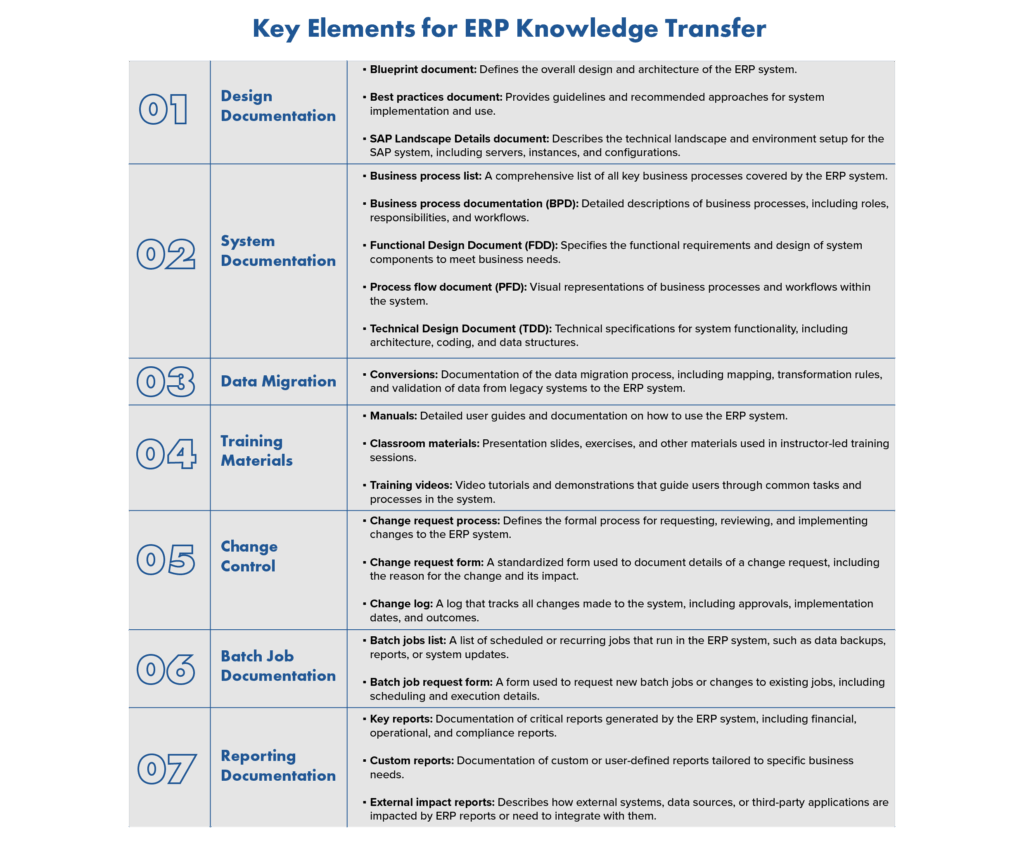
Source: Clarkston Consulting
ENSURING LONG-TERM SYSTEM SUCCESS
Comprehensive documentation across key areas—design, system processes, data migration, training, change control, batch jobs, and reporting—is crucial for the success of an ERP implementation. Well-defined documentation supports knowledge transfer, user adoption, and system sustainability, ensuring smooth operations and adaptability to future changes. It serves as a vital resource for troubleshooting, continuous improvement, and long-term system success.
Reach out to us today to learn more about ERP knowledge transfer documentation for SAP projects.
This article, written by Sean Wheatley, was originally published by a partner in our business ecosystem, Clarkston Consulting. Learn more about Clarkston here.